12 month prescriptions

12 Month Prescriptions
As from 1st February 2026, some people with stable, long-term health conditions may be able to get prescriptions for some medications for up to 12 months.

Your doctor will work with you to decide if a 12-month prescription is safe and appropriate for you and your health needs. If you feel this may be an option for you then please make a face-to-face appointment with your doctor to discuss. This visit will be a 12-month prescription appointment and if you wish to discuss other things then please make a double appointment.

12-month prescriptions are more likely to be suitable for people with stable, long-term health conditions when the dose of medication is unlikely to change and you do not require regular monitoring with blood tests or blood pressure.

The rules for controlled drugs like strong pain relievers and ADHD medicines are not changing. ADHD medications will continue to be prescribed for 3 months with no more than 1 month dispensed by the pharmacy. 

12 month prescriptions must be picked up from the same pharmacy. Please note if you need to change pharmacy's, lose your medications, or require an extra short supply until you can see your doctor for a face-to- face review, there will be an additional charge for this. 

 Please remember: Your health always comes first.

  • What Is a Ganglion Cyst?

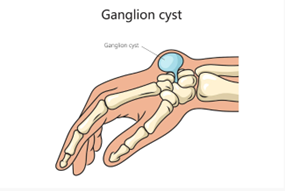
    A ganglion cyst is a noncancerous, fluid-filled swelling that develops when the inner lining of a joint or tendon sheath bulges through a weakened portion of its outer capsule — somewhat like an inner tube pushing through a hole in a tyre. The cyst contains a jellylike lubricating fluid similar in composition to synovial fluid.

    These cysts commonly appear on the wrist (dorsal or volar side), fingers, or near the foot/ankle, though they can emerge around other joints as well. Many ganglia change size over time, sometimes feeling firm, sometimes soft, and may cause symptoms when they press on adjacent structures. The image shows the typical location of a ganglion cyst on the wrist.

    Symptoms of Ganglion Cyst & When to Seek Care

    Typical presentations include:

    • A visible or palpable lump beneath the skin, usually round or oval
    • Fluctuating size — may expand with activity or shrink at rest
    • Discomfort, aching, or pressure in some cases
    • Numbness, tingling, or weakness if a nearby nerve is compressed
    • Impaired motion or functional limitation when the cyst interferes with joints or tendons

    You should consider medical evaluation if the cyst becomes painful, grows rapidly, restricts movement, or causes neurologic symptoms (numbness/tingling).

    How We Diagnose a Ganglion Cyst

    At CityMed, diagnosing a ganglion typically begins with clinical examination. Key steps may include:

    1. Physical assessment — size, location, consistency, relationship to joint/tendon, transillumination (shining light through the lump)
    2. Imaging as needed
       - Ultrasound to confirm fluid content or identify hidden (occult) cysts
       - MRI if complex anatomy or suspicion of alternate diagnoses
       - X-rays mainly to rule out bony lesions or associated arthritis

    Through imaging and exam, we differentiate ganglia from other soft tissue masses (lipoma, tenosynovial tumors, etc.).

    Ganglion Cyst Treatment Options

    We tailor treatment based on your symptoms, cyst behavior, and preferences. Options include:

    Observation (“Watch & Wait”)

    If the cyst is painless and not interfering with function, monitoring is often suitable. Many ganglion cysts remain stable or even resolve on their own over time.

    Aspiration & Cortisone Injection

    For symptomatic cysts, we may remove the fluid via needle aspiration, often followed by injection of corticosteroid into the cyst lining to encourage collapse. This procedure is minimally invasive and typically done under local anesthetic.

    However, recurrence is common because the cyst’s stalk or root remains intact.

    Surgical Excision

    When conservative treatment fails, or symptoms persist, surgical removal is considered. At CityMed, our experienced clinicians perform ganglion removal surgery under local anesthetic in our purpose-built procedure theatre.

    We perform the procedure under local anesthetic in our purpose-built procedure theatre.

    • The cyst and its stalk (connection to joint or tendon sheath) are excised to lower the chance of recurrence.
      Post-operative care involves wound care, physiotherapy, and gradual return to activity.

    Why Choose CityMed for Your Ganglion Cyst Treatment?

    • Safe local anesthetic procedures in a dedicated, sterile setting
    • Experienced clinicians skilled in hand, wrist, and soft tissue procedures
    • Patient-centered care — we review all options (from observation to surgery)
    • Clear communication — we explain benefits, risks, and recurrence rates
    • Follow-up support & rehabilitation to restore function

    FAQs

    Will the ganglion cyst go away on its own?
    Yes — many ganglion cysts stay stable or regress spontaneously over months to years, especially if they’re asymptomatic.

    Does aspiration always work?
    Not always. Because the cyst’s “root” often remains, fluid often recurs. Some cysts require multiple aspirations before they resolve (or may not).

    Is surgery painful? Will I have scars?
    Surgical excision under local anesthetic is generally well tolerated. A small scar is expected, usually in a concealed location. Risk of complications is low when performed by experienced practitioners.

    What is the recurrence rate after surgery?
    Recurrence is lower compared to aspiration, especially when the cyst stalk is removed. However, recurrence is still possible when complete excision is not achieved.

    Can I continue using my wrist/fingers during treatment?
    We usually encourage gentle, non-painful movement except immediately post-procedure. Immobilization with a splint may help symptom control.

    If you're experiencing a lump in your wrist, hand, finger, or foot and believe it might be a ganglion cyst — or if you have pain, limitation, or cosmetic concern — please contact CityMed. We’re happy to evaluate and guide you on the most appropriate treatment plan.

    General Enquiry     View All Fees


    Or call us Monday to Friday 8am-5:30pm

    09 377 5525